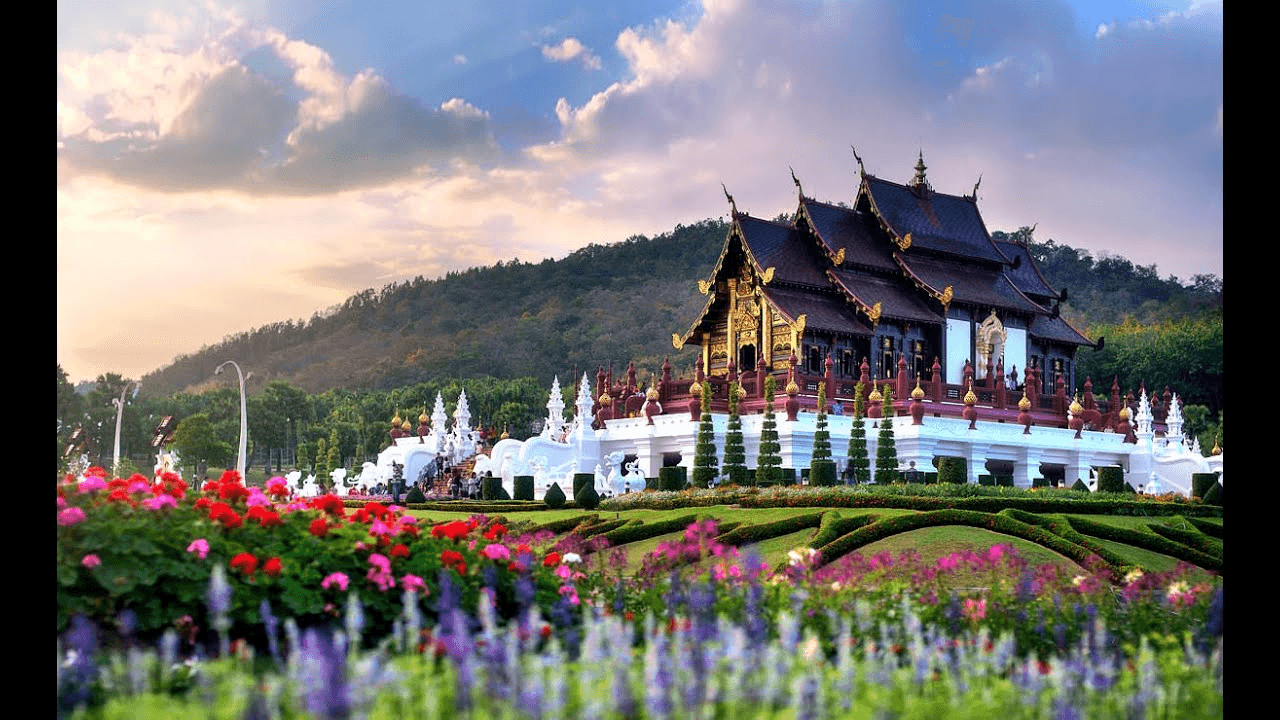
Lanna Heritage City
Chiang Mai Proper
Temples, Mountains and Slow Mornings

Temples, Mountains and Slow Mornings
Everything worth knowing before you book: when to come, what to budget and how to move around once you land.
Chiang Mai is the cultural capital of northern Thailand, a former Lanna kingdom seat set in a valley ringed by forested mountains. The square Old City still sits inside its moat and crumbling walls, packed with temples, guesthouses and coffee shops, while the newer districts of Nimmanhaemin and Santitham spread west and north with restaurants, co-working spaces and night markets.
Most visitors use the city as a base rather than a single stop. Doi Suthep sits twenty minutes from the moat, Doi Inthanon and the Mae Taeng valley are day trips, and Pai and Chiang Rai are within a half day by road. The pace is slower than Bangkok, the costs are lower, and four or five nights is usually enough for the city itself plus two trips out.
No tours in this category yet. New Chiang Mai Proper experiences are added as we vet more locals.
Airport pickups, day charters and long runs to Pai, Chiang Rai and Lampang with vetted local drivers.
Chiang Mai rewards travellers who slow down. It has the temples and markets you would expect from an old northern capital, but also mountains, waterfalls and hill villages close enough to reach before lunch, and a food scene that ranges from 40 baht noodle stalls to Michelin-listed Lanna kitchens.

There are over 300 temples in and around the city, from the gilded hilltop shrine at Doi Suthep to the 14th century brick ruins of Wat Chedi Luang. Entry is usually free or a small donation, and most are still working monasteries rather than museums.
The valley is surrounded by national parks. Doi Inthanon, the highest point in Thailand, is a two hour drive, and closer options like Mae Sa and Sticky Waterfall fill an easy half day. You can be hiking in cloud forest by mid-morning and back for dinner in town.
Northern Thai cooking is its own thing: khao soi curry noodles, sai ua herb sausage, nam prik ong and sticky rice eaten by hand. The Sunday Walking Street and Chang Phuak gate stalls are the easiest introduction, and a cooking class is one of the most booked activities in the city.
Rooms, food and transport all cost noticeably less than Bangkok or the southern islands, and the city is small enough to cross by scooter in twenty minutes. It is a comfortable first stop in Thailand and a common base for people staying a month or more.
The Vibes are amazing The Vibes are amazing The Vibes are amazingThe Vibes are amazingThe Vibes are amazingThe Vibes are amazingThe Vibes are amazingv

Chiang Mai has been a base for remote workers for over a decade, and the infrastructure shows it. Nimmanhaemin is dense with co-working spaces, specialty coffee and month-to-month condos, fibre internet is standard, and a comfortable studio with a pool runs well under what a similar place costs in Bangkok. The trade-off is the burning season from roughly March to April, when air quality drops sharply and much of the long-stay crowd leaves for the coast. If you are planning a stay of a month or more, arriving in November and leaving before March is the pattern most people settle into.
The city centre is walkable. For everything else, transport is cheap, easy and everywhere.
Shared red pickups that run flexible routes around the city. Flag one down, tell the driver where you are going, and expect 30 to 50 baht per person for a short hop inside the Old City area.
Both apps work well here and are the simplest option if you would rather not negotiate. Airport to the Old City is usually 150 to 250 baht depending on demand.
Around 200 to 300 baht a day and the easiest way to reach Doi Suthep or Mae Rim on your own. You need an international licence with a motorcycle endorsement, and police checkpoints do enforce it.
Best for airport arrivals, day trips and long runs to Pai or Chiang Rai. Fixed price, fixed pickup time, and an English-speaking driver on most routes.
The short answer is November to February. Days sit in the high twenties, evenings are cool enough for a jacket, the skies are clear and the mountains are at their best for hiking. It is also the busiest and most expensive window, and Yi Peng and Loy Krathong in November sell out accommodation months ahead. March and April are hot and hazy, with agricultural burning pushing air quality to genuinely poor levels in some weeks, so plan around it if you are sensitive. From May to October the rain arr
Highs of 27 to 30C, lows around 14C, almost no rain and clear mountain views. Peak season, so book tours and hotels early, especially around the November lantern festivals and New Year.
Highs above 35C and the worst air quality of the year from agricultural burning. Songkran in mid-April is a highlight if you want the water festival, but plan indoor days and check air quality readings.
Warm and humid with short heavy afternoon storms. The lowest prices of the year, the greenest scenery and the fullest waterfalls, at the cost of some rearranged afternoons.
Shoulders and knees covered at all temple sites. A light scarf in your day bag is enough, and shoes come off before you enter any building.
Songthaews, markets and street food stalls are cash only, and most vendors cannot break a 1,000 baht note. Keep 20s and 100s on you.
The Kew Mae Pan trail closes from June to October and the park gets busy at weekends. A morning start beats both the crowds and the cloud cover.
If you have asthma or travel with kids, look up the AQI before committing to late-season dates, and pick coastal Thailand instead if the readings look bad.
Make sure to have avalid visa if travelling in THailand longer than a month.
Why not
lorem ipsum lorem ipsum lorem ipsumlorem ipsum lorem ipsum lorem ipsumlorem ipsum lorem ipsum lorem ipsumlorem ipsum lorem ipsum lorem ipsumlorem ipsum lorem ipsum lorem ipsumlorem ipsum lorem ipsum lorem ipsumlorem ipsum lorem ipsum lorem ipsumlorem ipsum lorem ipsum lorem ipsumlorem ipsum lorem ipsum lorem ipsumlorem ipsum lorem ipsum lorem ipsum
lorem ipsum lorem ipsum lorem ipsumlorem ipsum lorem ipsum lorem ipsumlorem ipsum lorem ipsum lorem ipsumlorem ipsum lorem ipsum lorem ipsumlorem ipsum lorem ipsum lorem ipsumlorem ipsum lorem ipsum lorem ipsumlorem ipsum lorem ipsum lorem ipsumlorem ipsum lorem ipsum lorem ipsumlorem ipsum lorem ipsum lorem ipsumlorem ipsum lorem ipsum lorem ipsumlorem ipsum lorem ipsum lorem ipsumlorem ipsum lorem ipsum lorem ipsumlorem ipsum lorem ipsum lorem ipsumlorem ipsum lorem ipsum lorem ipsumlorem ipsu